

Athens, Greece
“The strong do what they can and the weak suffer what they must” – Thucydides
In 416 BC, powerful Athens attacked the small neighbouring island nation of Melos, a military action known as The Siege of Melos.
Greek historian Thucydides studied the political consequences of the confrontation between Athens and Melos. His Melian Dialogue poses an ethical dilemma, the might of the strong against the rights of the weak.
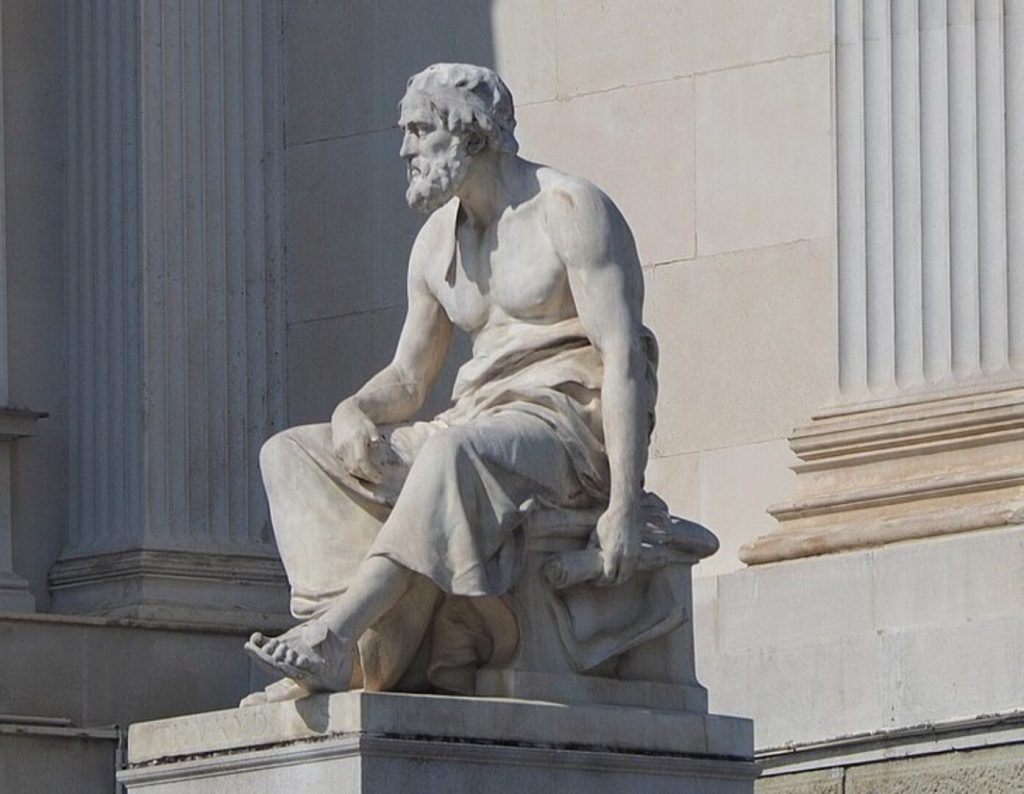
Statue of Thucydides, author of the Melian Dialogue, outside the Austrian parliament.
Prior to invading, Athens demanded that Melians surrender and pay tribute to Athens or face annihilation. The Athenians offered no moral justification for an invasion, but instead bluntly told the Melians that Athens needed Melos for its own ends and that the only thing the Melians stood to gain was self-preservation.
The one-sided negotiation was based upon political realism, “the strong do what they can and the weak suffer what they must”, according to Thucydides.
The Melians refused to negotiate under those terms, and the Athenians attacked the island.
Athens sent 3400 troops to Milos in the summer of 416 BC but found that Melian defences were too strong to capture by force. The Athenians imposed trade barriers, cutting Melos off from supplies, which resulted in The Melian Famine. Weakened by the sanctions and resulting hunger, the Melians were forced to surrender.
Athens settled 500 colonists on the island to run Milos affairs.
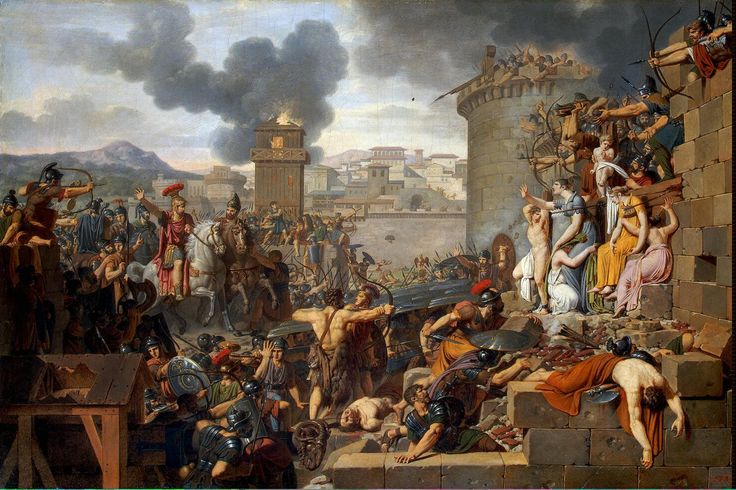
All Melian men of fighting age were executed and the women and children were enslaved.
Athens was involved in a greater war with Sparta at the time, which tapped their financial and military resources. Within 15 years of laying siege to Milos, the Athenian presence on the island had weakened to the point that islanders were able to expel the colonists and restore independence. Melos aligned itself with Sparta economically and militarily, to ensure that Athens would never again control their destiny.
The massacre of the Melians shocked the Greek world, even in Athens. In 405 BC, with the Spartan army closing in, the citizens of Athens worried that the Spartans would treat them with the same cruelty that the Athenian army had shown the Melians.
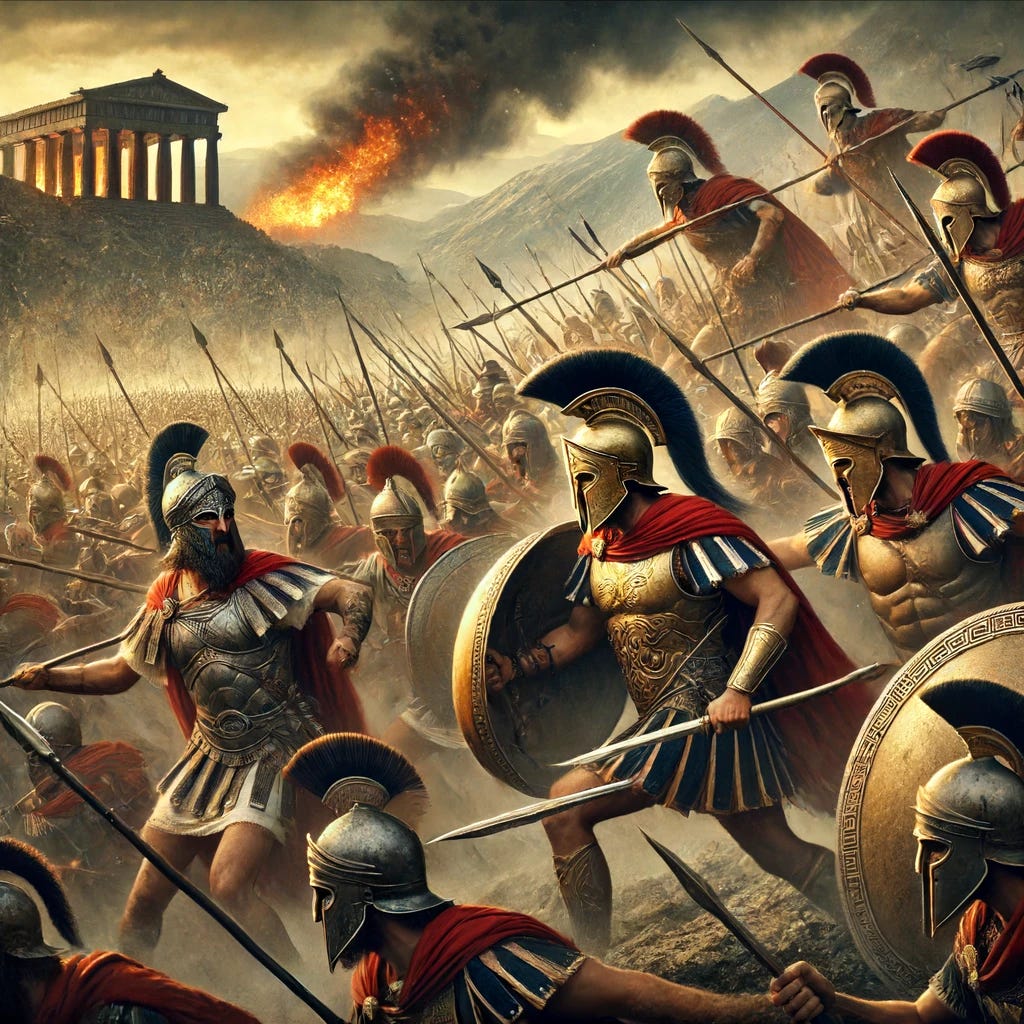
Athens fell to Sparta at the end of the Peloponnesian War and suffered severe retribution at the hands of their conquerors.
Dēmos (citizen) Kratos (rule) – Dēmokratía (democracy)
Long before the siege of Milos, Athens had been the birthplace of Dēmokratía. Starting as early as 600 BC, Athenian citizens could participate in governance, military and financial affairs, and justice (provided they were male, and not slaves). Democracy in Athens progressed in fits and starts, as it still does, worldwide.
Athens lost its way during the Peloponnesian War (431 to 404 BC). The democratic constitution was overturned during the Regime of the Thirty Tyrants, an oligarchy that attained power through voter manipulation and intimidation and briefly ruled Athens from 404 to 403 BC.
Might is Right
Democracy isn’t the only form of government introduced by the Athenians. They also devised a Kratocracy (from the Ancient Greek: κράτος, ‘might; strength’) a government by those strong enough to seize control through violence or deceit. A Kratocracy temporarily displaced Democracy in ancient Greece.
Although they maintained power for only a short time, the oligarchic regime resulted in the killing of their enemies (5% of the Athenian population), the confiscation of citizens’ property, and the exile of democratic supporters.
But Democracy eventually recovered. Reforms, following the demise of theThirty Tyrants, resulted in stronger constitutional powers. The more robust Athenian democracy became a model for governance by empowered citizens around the world.
Ever evolving democracy, kindled in Athens, has endured for 25 centuries. The model is constantly being tested, sometimes it falters, but Democracy remains humanity’s best hope for equitable governance.
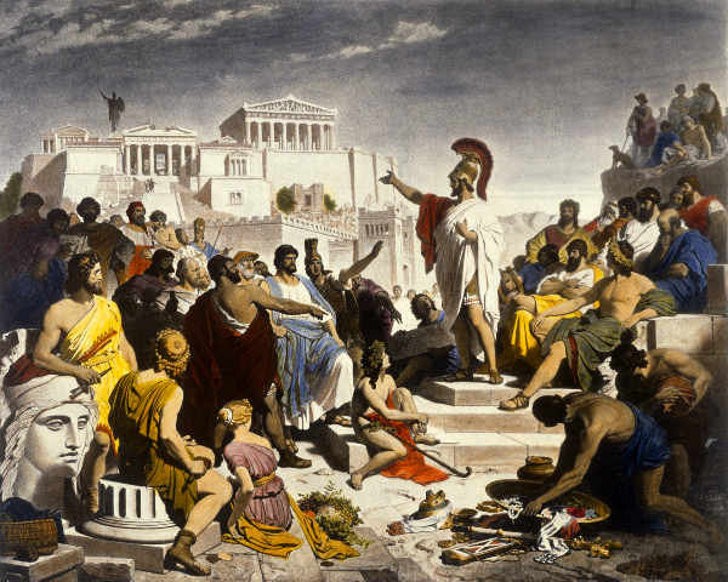
Tyrants who attempt to overthrow Democracy win a battle now and again, but they will not …
… Win the War.
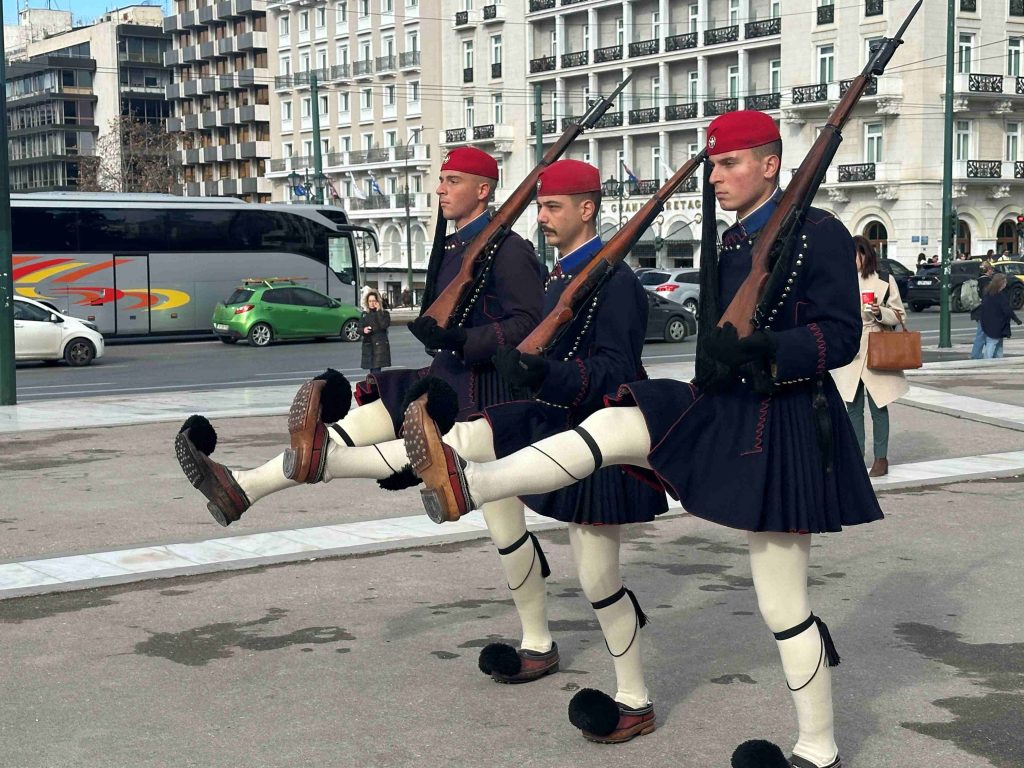
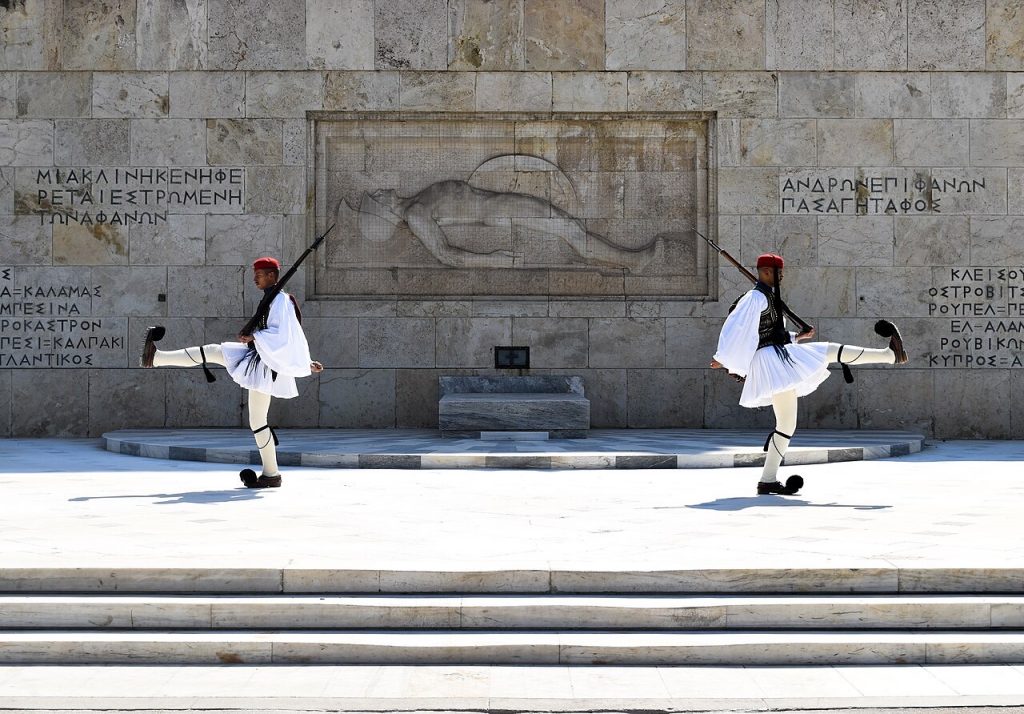
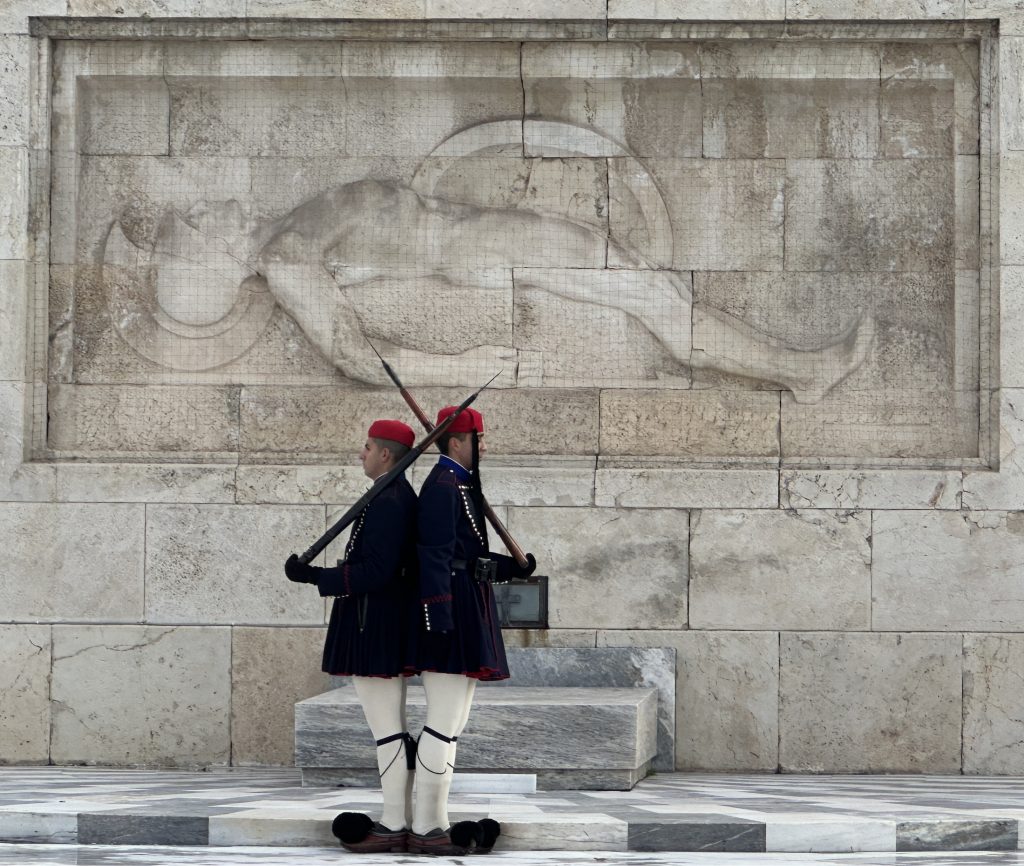
The defence of Democracy comes in many forms. In modern Greece, the Presidential Guard protects the Presidential Mansion and the Tomb of the Unknown Soldier.
Like and Subscribe…
To join the WellWaterBlog audience, scroll down and add your e-mail address to the growing list. You will receive a notice each time a new article is posted and nothing else – No Advertising, No Solicitations, No B.S., Just Fun.
Autumn Downey
Thanks. Good lessons once again.
Russ Paton
Thank you. The story has been repeated many times with proper noun substitutions.
Judy Darvill
Sounds scarily familiar! Thanks for the history lesson and hope that this too shall pass.
Russ Paton
It shall, I don’t think the “Athenians” have the stomach for this much longer”….