

May 01, 1945 – Bergen-Belsen, Germany
Albert Allsop marched across wartime Europe with a famous Canadian painter. I doubt they knew one another, but Alex Coleville was with the Canadians in Normandy during the D-day invasion. He was in Nijmegen, Holland when Al was there, and they both witnessed the atrocities of Bergen-Belsen in April of 1945.
Alex Coleville, originally from Amherst, Nova Scotia, enlisted in the Canadian infantry in 1942 and served in a combat capacity until his talents as an artist were revealed. Coleville was elevated to the rank of lieutenant and assigned duties as a war correspondent and artist.

Alex Coleville, painting near Nijmegen, Holland.
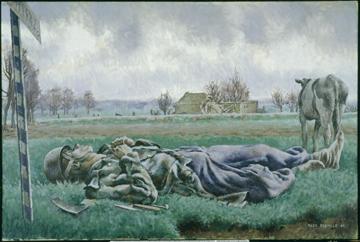
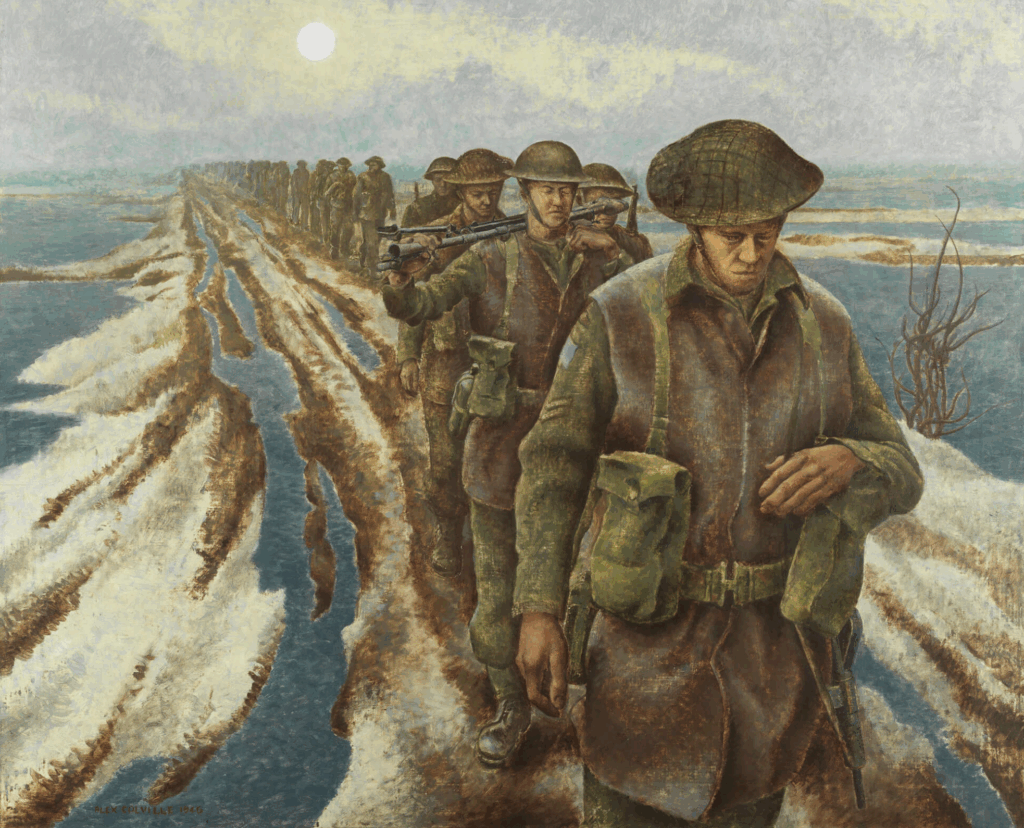
Colville’s wartime paintings graphically depict the horrors he experienced while traveling with the 3rd Canadian Army Division.
Tragic Landscape (1945)
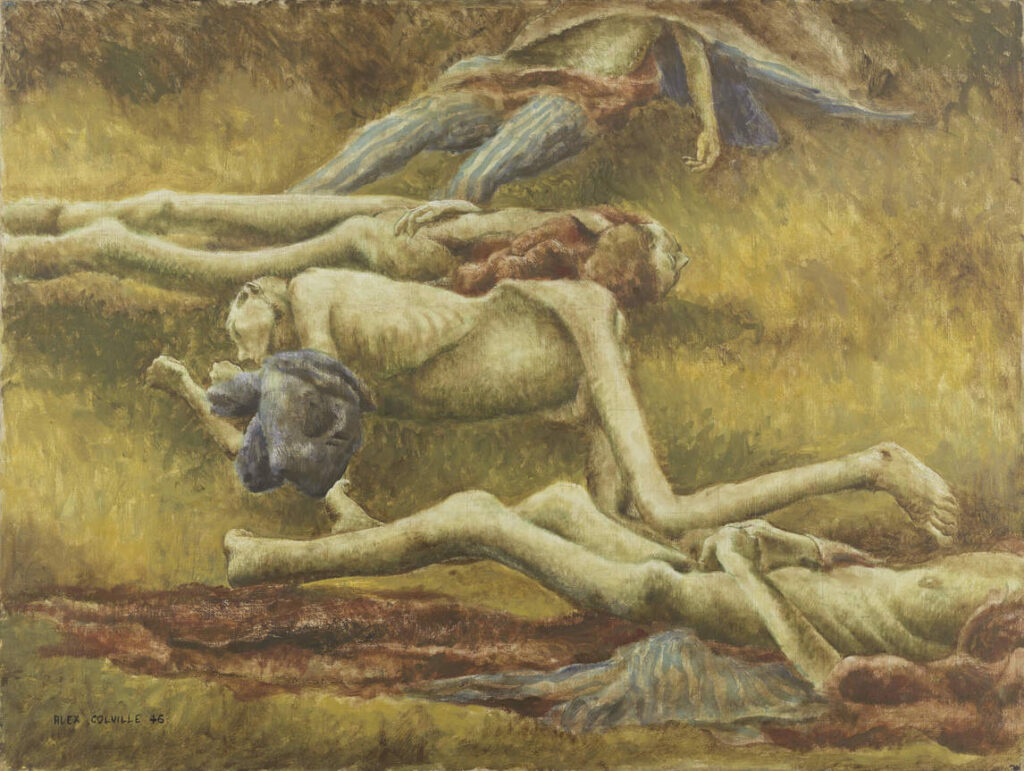
Bodies in a Grave (1946)
Infantry near Nijmegen (1945)
“His assignment to the concentration camp after its liberation exposed him to the full horror of human depravity, a traumatic and deeply affecting experience that he described as leaving him feeling numb.”
– Alex Coleville Biography
Coleville continued his artistic career after the war. The hostilities were over, but his post-war art continued to exhibit the tension he felt in Europe. Coleville’s paintings have a “What is going to happen next?” quality, that reflects the uncertainties of war.
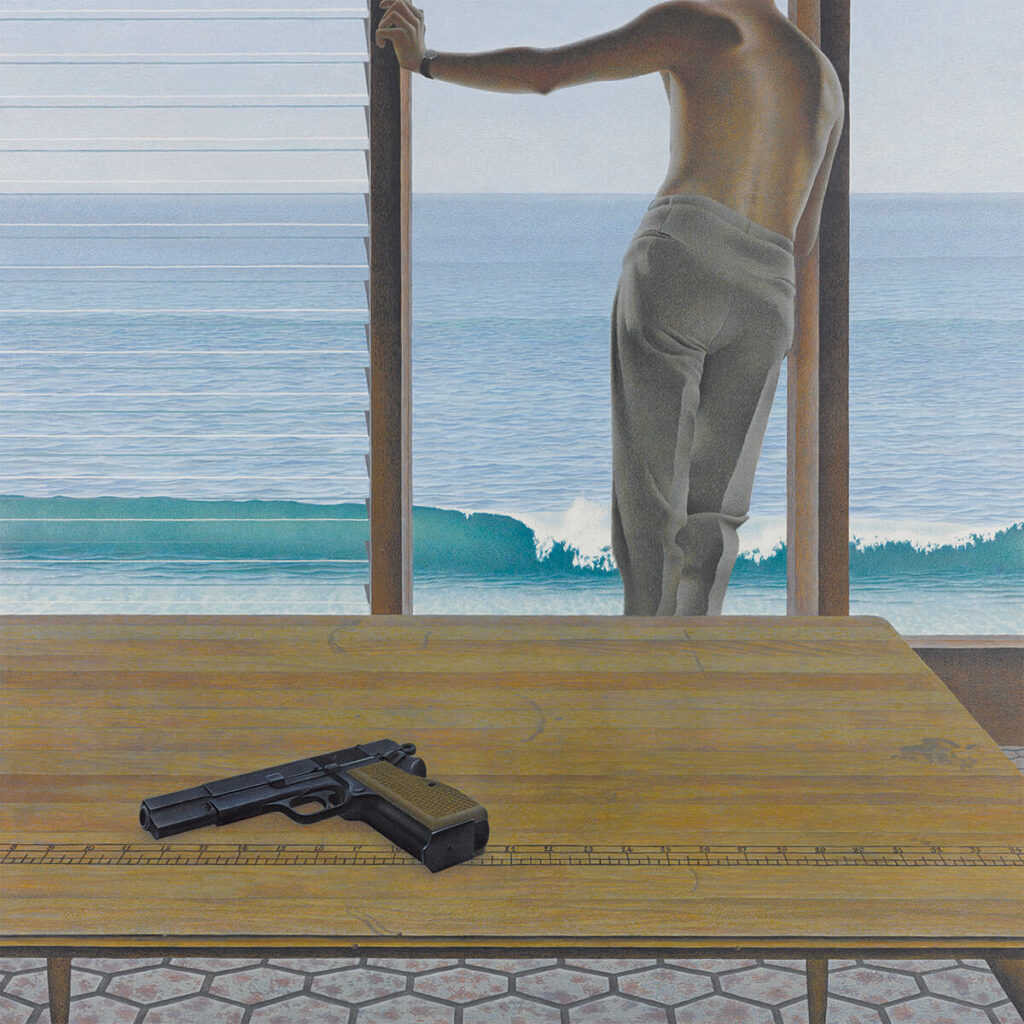
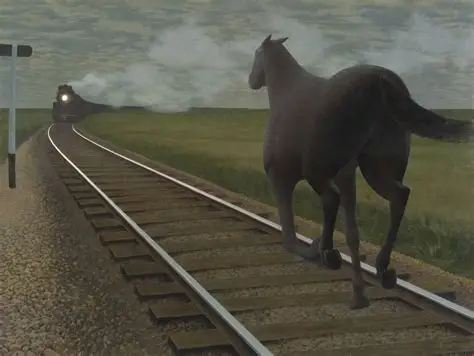

“The war profoundly affected Alex Coleville’s art, instilling a lasting sense of the fragility of life, the potential for human violence, and the preciousness of ordinary, peaceful existence. His harrowing experience as a war artist, particularly his assignment to the Bergen-Belsen concentration camp, led to an enduring sense of disillusionment and a sharpened awareness of mortality that informed his signature style of meticulous, structured compositions and themes of isolation, trauma, and existential tension”.
– Alex Coleville Biography
The war changed Albert Allsop too. I never knew him as a young man; I met Al when he was 68 years old. I don’t know what his character was like before the war, but it is clear to me that the experience had changed him. Al was frugal with his possessions and frugal with his emotions.
I once introduced Albert to a customer of mine who was of German descent. Phil Spiess was a soldier in the German army during WWII; he spent most of the war imprisoned in a Russian POW camp. Phil survived that ordeal and immigrated to Canada after the war to establish an earthmoving business.
When Al accompanied me to work one day, we happened to bump into Phil, and I introduced them. As they shook hands I said,
“You two soldiers might not have been such good friends 50 years ago”.
The comment was meant as a joke but neither of the former combatants found any humor in it. I asked Al about it on the drive home, but I didn’t get much of a response.
Albert was a kind man, but he could be moody and psychologically distant. Until he met Freda, Bear’s mom, he had difficulty with relationships.
How much of Albert’s character was a residue of war, I cannot say.
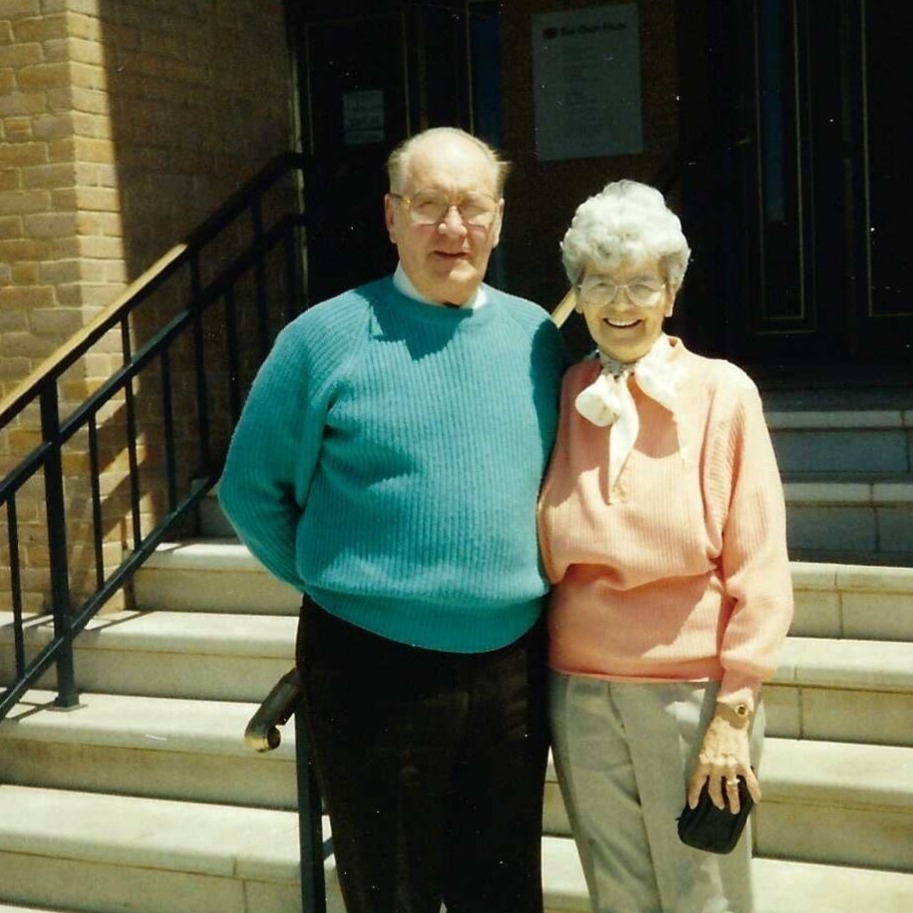
Albert and Freda in 1990.
Following the path of Canadian soldiers through Europe in 1944-1945 has changed me too. I haven’t been shot at or taken prisoner, in fact everyone we have met along the way has been extraordinarily friendly, but still, I feel a creeping sense of foreboding.
My disillusionment stems from the fact that we have this graphic example of what comes of hatred, of territorial greed, of tribalism blended with fascism, and yet it appears we have learned nothing.
The Second World War is only one lifetime behind us, but humanity seems poised to repeat it.
The British, Americans, and Russians of 1945 were heroes to us all. Allied by a common threat, they fought to preserve our freedom and won.
Today, the Russians are an aggressor. And the Americans? Who can say where they are headed, despite their hard-fought freedom?
I wonder what Alex Coleville and Albert Allsop would say about current political circumstances. I think they would agree that not much has changed, other than the hob-nailed boot of oppression appears to be …
… On the Other Foot.

This is the eleventh in a series of posts following Albert Allsop’s trek through Europe in 1944-45. The series begins on September 28, 2025.
Autumn Downey
Alex Colville is one of my favourite artists. The graphic reality of his paintings have even more impact than photos. An excellent article, thank you, Russ. The current times make one wonder if anything has been learned.
Russ Paton
Unrelated to the current topic, but Coleville’s “To Prince Edward Island” is my favourite. Thank you for following along.