

1944-10-04 – Eindhoven, Holland
Everyone and everything in the military during WWII had a nickname.
Collectively, enlisted men were Grunts, and officers were POGs (People Other than Grunts), but every individual also had his own moniker.
General Sir Bernard “Monty” Montgomery shaking hands with General George “Old Blood and Guts” Patton (no relation).

Nicknames weren’t assigned; they developed organically as soldiers got to know one another. The names could be attributable to a place of birth Tex, stature Shorty (usually reserved for tall people), or by some character trait or happenstance. A friendly fellow might be Buddy. One soldier with a leg injury was called Step-and-a-Half. An unfortunate soldier who was caught sitting to pee was nicknamed Squatter; the name followed him the entire war.
It could have been worse. German gestapo leader Klaus Barbie was called The Butcher of Leon for heinous war crimes he ordered or personally carried out.
I don’t know what Albert’s nickname was, maybe Al was enough. Lloyd George Robertson, one of the guys in Al’s troupe, was called Ike, for no reason I can think of.

Ike and Al
The collective name for Aircraftmen, like Ike and Al, was Airk or Erk.
There were many nicknames for the enemy. Germans were Fritz, Jerry, Krauts (as in sauerkraut), Heinie, Hun, or just Nazis. Italians also called Germans Krauts but their version was Crucchi.
Brits were Teabags or Tommy, as in Tommy Atkins (everyman in Britain, like John Doe).
The Germans assigned nicknames too. French were Froschfresser “Frog eaters”, and Americans were called Kaugummifresser “Chewing gum eaters”. For reasons we can be very proud of, Germans called Canadians Sturmtruppen “Stormtroopers”, a nickname earned during First World War battles at Ypres and Vimy Ridge.
The Soviet Union Red Army had 13 million men and women in uniform during WWII. According to the Germans, every single one of them was named Ivan.
Nicknames weren’t just used on the European front. In the Pacific the enemy were Japs or Nips (Japan or Nipon). The Allies weren’t the only ones who could dish out pejorative names. アリゲーター (pronounced “Arigētā) was Alligator in Japanese, any Allied personnel in an amphibious vehicle.
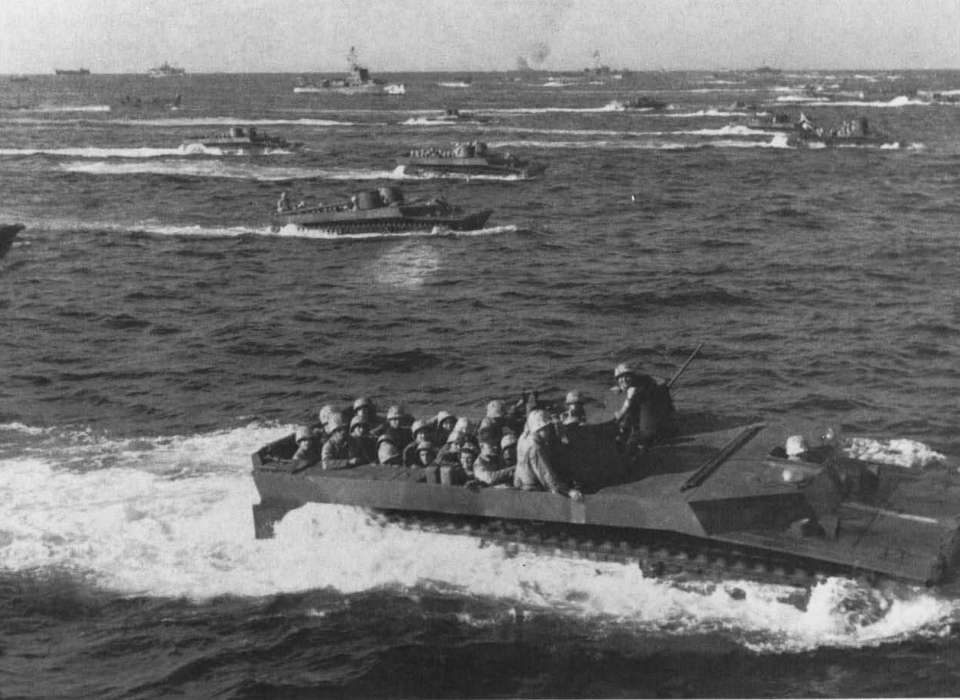
Military equipment was also given nicknames. Pet names were more commonly used than the real labels.
Armour piercing weapons were Can-openers. The British called Mills Bombs, Christmas-Crackers and Tanks were Fire Buggies. Soviet submachine guns were Burp Guns.
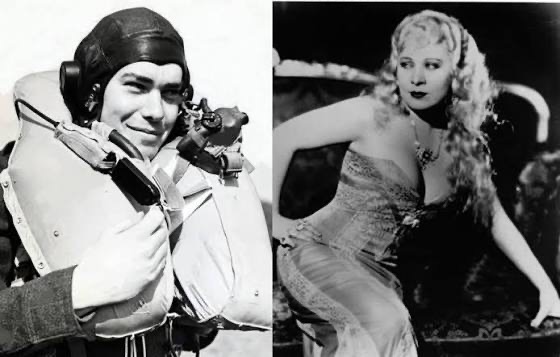
An inflatable life vest was called a Mae West, in honour of a buxom film star.
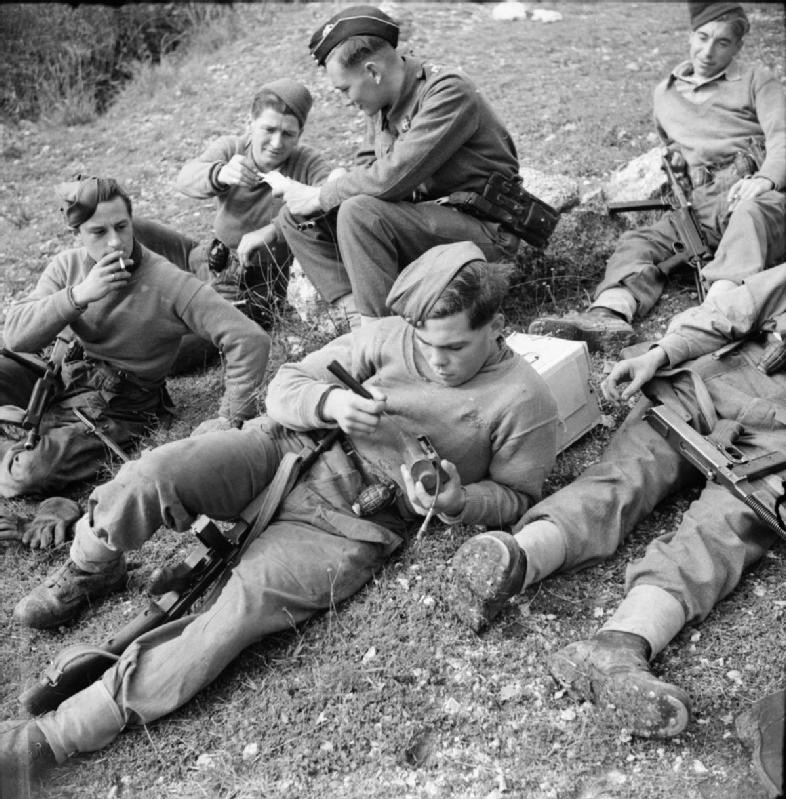
Hand Grenades were known by many names: Potato Masher (German), Pineapple (American), Hawkins (British).
In this photo, a British soldier is tinkering with a Hawkins, with a Pineapple strapped on his belt.

In this one, a German infantryman is about to throw a Potato Masher.
I think the German design might have given them a slight edge. I have never thrown a hand grenade but I am certain that I could toss one attached to a handle farther than a ball or can-shaped one. What do you think, would a Potato Masher or a Pineapple be more effective in battle?
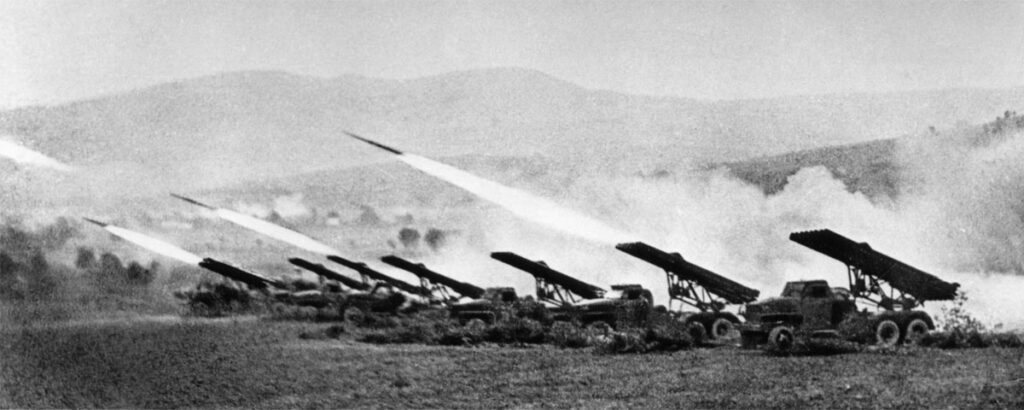
Stalinorgel (Stalin’s Organ) – a phallic name given to Russian Katjusha rocket launchers.
Jerry Cans are so named because they were designed to carry fuel while fighting the Jerry’s.
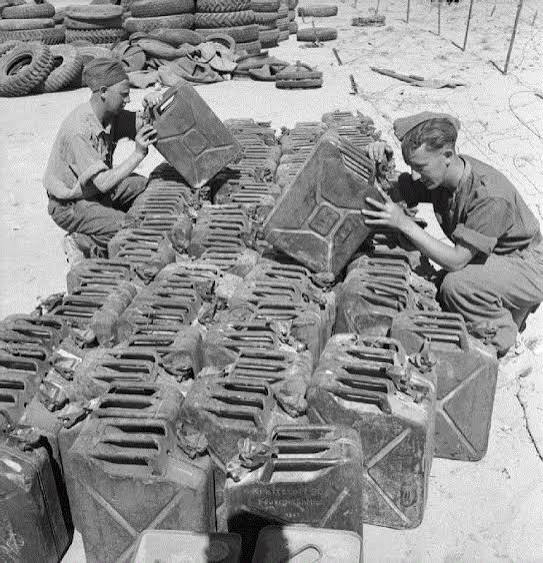
My brother Kevin is responsible for this tidbit:
“There are three handles on each can. When carried by one person he would use the centre handle. If two soldiers were carrying a heavy Jerry Can, they would hold it between them using the outside handles.”
But let’s get back to people nicknames.
American jazz singer, Dizzy Gillespie did not serve in World War II. At his Selective Service interview, he told the local board, “in this stage of my life here in the United States whose foot has been in my ass?” … “So if you put me out there with a gun in my hand and tell me to shoot at the enemy, I’m liable to create a case of ‘mistaken identity’ of who I might shoot.” He was classified “4-F” (a person considered unfit for military service by the U.S. Selective Service System due to physical, mental, or moral reasons). In other words, he was
… Dizzy.
Salt Peanuts – Dizzy Gillespie.
I have inserted a link to one of Dizzy Gillespie’s wartime songs, but I am not recommending it. The song is 1940’s Jazz, which is a genre that takes some patience to listen to. The song lyrics consist of two words “Salt” and “Peanuts”.
Click the link if you want, but the song makes me dizzy.
Terri Bear and Russell Russ Paton in Eindhoven, Holland
This is the eighth in a series of posts following Albert Allsop’s trek through Europe in 1944-45. The series begins September 28, 2025.
Like and Subscribe…
To join the WellWaterBlog audience, scroll down and add your e-mail address to the growing list. You will receive a notice each time a new article is posted and nothing else – No Advertising, No Solicitations, No B.S., Just Fun.
Leave a Reply