

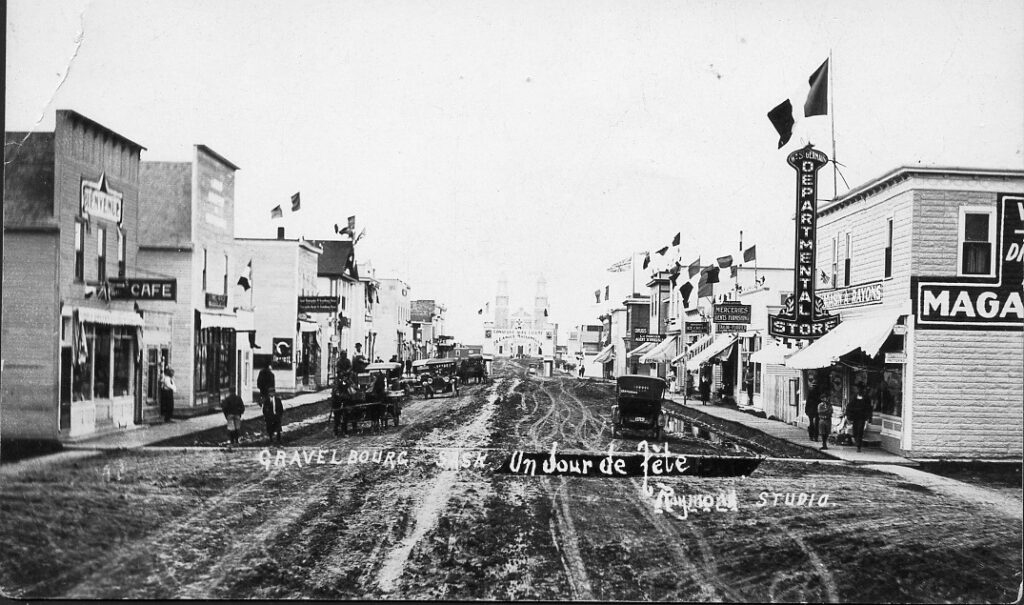
The technical term for Gravelbourg mud is “vertisolic”.
“Vertisolic soil is characterized by a high clay content (60% or more) and the tendency to swell when wet.” – Wikipedia
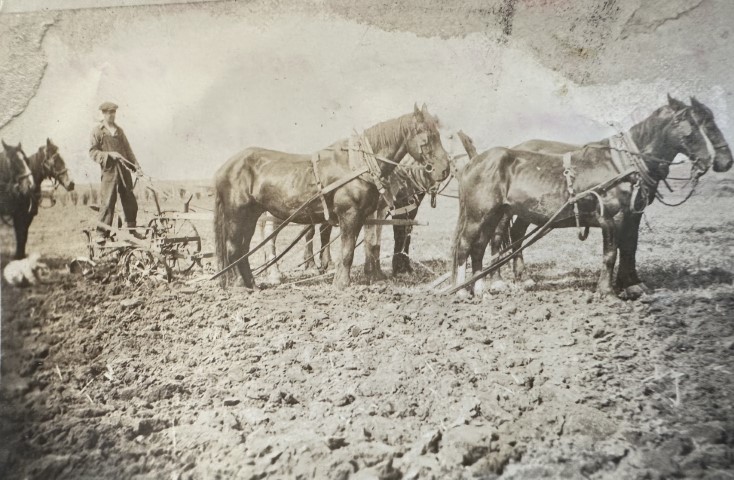
In the days before pavement, roads in the Gravelbourg area were impassable after a heavy rain. Clay soil would cling to vehicle tires, stalling progress. Even horses had difficulty maneuvering in Gravelbourg muck.
Wm. (Billy) Paton working vertisolic Gravelbourg land in 1923
Boggy roads were a minor inconvenience for most people living in the Gravelbourg area in the early days. They were forced to stay home for a day or two, then the sun would come out and they could carry on. But one wet day in 1921 went well beyond an inconvenience; it altered the life course of Ethel Phillipson and may have contributed to her premature death.
I have written about the tragic life of Ethel Phillipson in previous posts. If you read the articles, (appended below) you will recall that Ethel was incarcerated for a time at St Agnes Priory, a “reform school” near Winnipeg, in her teens and early twenties. When I wrote the pieces, I was unaware of why Ethel was sent to “prison”. I speculated (inaccurately) that she may have had an unplanned pregnancy, possibly an abortion.

I presumed that Ethel was sent to St Agnes Priory Reform School, as so many young women were at the time, for succumbing to one of life’s most basic instincts, at a time when such behaviour was considered “delinquent”.
I was wrong. Ethel wasn’t sent away because she broke the law or got pregnant out of wedlock; she was sent to reform school because of Gravelbourg mud. More on that later….
While researching Ethel’s story, I had the good fortune of encountering some wonderful people.
A lady named Kiersten from Marymound (formerly St Agnes Priory) was kind enough to search through 100 years of archival records looking for documents related to Ethel’s time there. Kiersten found a letter and an admittance document from 1928, which she forwarded to me. The documents (appended below) shed some light on Ethel’s circumstances, but the reason for her incarceration was still unclear.
I also received a call from Barbara Douglass, Ethel’s grand niece. Barb expressed an interest in helping me trace our common ancestor’s history, so we met to do just that. Barbara and her brother Brent spent a delightful afternoon with us. We delved deep into family history and analyzed the evidence we have about Ethel.
While she was here, Barb called her Aunt Hazel. That was on June 28th, which happened to be Hazel’s 96th birthday! Hazel not only possesses a wealth of family information; she is an absolute treasure in her own right. Hazel bedazzled us with stories about Ethel and the Phillipson family.
We learned a lot about Ethel, and a little about life itself from Aunt Hazel….
When Ethel was 13 years old, she had an appendicitis attack. Gravelbourg hospital was only six miles from the farm; they had physicians and medical facilities capable of dealing with such an emergency, but the roads were impassable due to heavy rain and boggy conditions. Ethel never made it to hospital for treatment.
Rural Saskatchewan didn’t have telephone service in 1921, so there was no way to get medical advice or assistance.
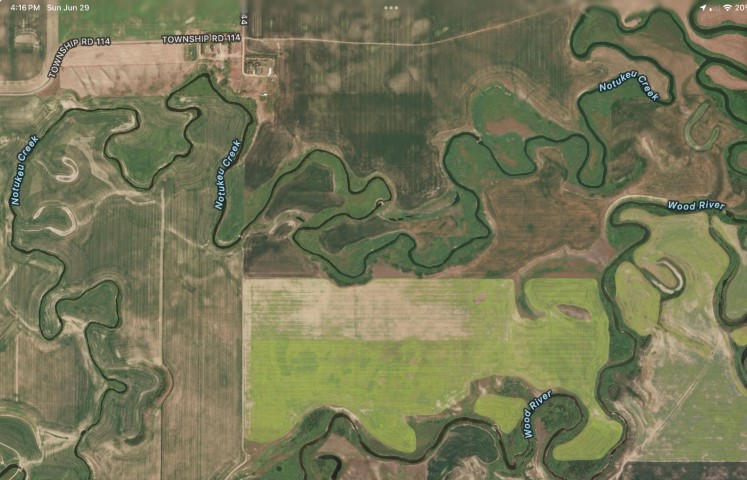
The Phillipson farm lies on a plain, with the Wood River to the east. Notukeu Creek crosses the main access road to Gravelbourg south of the farm, and Wiwa Creek runs to the north. During a significant rain event, there was no way to travel in any direction in the days before roads were paved.
Hazel said that Ethel’s appendix burst without access to medical care. The toxins in her body affected Ethel’s mind. She survived the ordeal, but she suffered severe psychological and physical trauma as a result of untreated sepsis.
Based upon Hazel’s observations and other clues to Ethel’s condition in the correspondence we have, it appears that she suffered from depressive, psychotic, and bipolar disorders.
Hazel said that Ethel developed nervous tics, she was depressed and had psychotic episodes that often included violence. After an episode that involved Ethel biting a neighbour, her parents admitted Ethel to various treatment facilities. Hazel mentioned Weyburn Psychiatric Hospital. We know that Ethel was admitted to St Agnes Priory, at least twice. In later life, Ethel spent time in a Moose Jaw care facility.
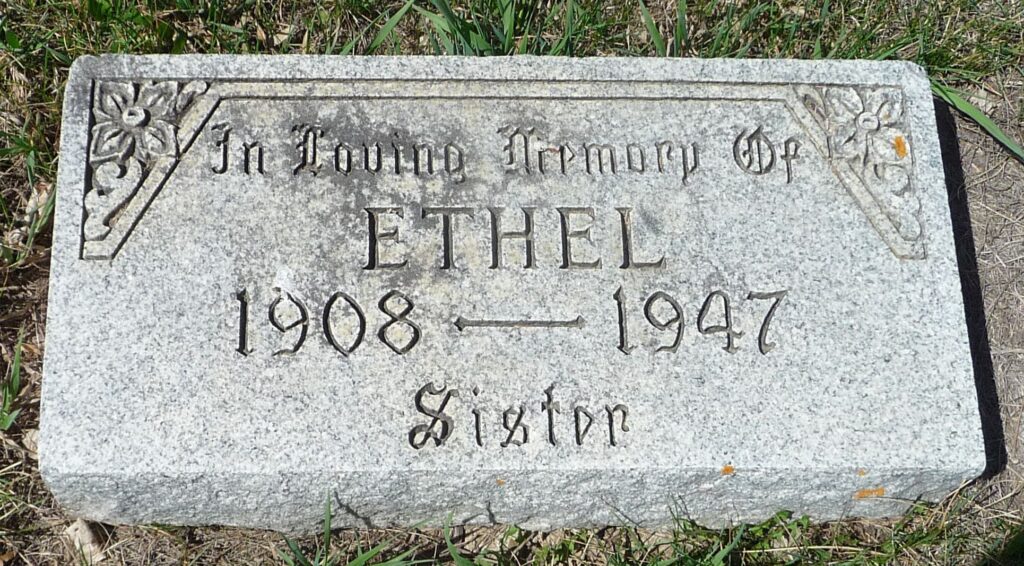
Ethel perished in 1947 at the age of 39.
Ethel Phillipson lived and died under tragic circumstances, all attributable to …
… Gravelbourg Mud.
But Ethel’s life continues to provide meaning. Because of her, I have interacted with some wonderful people …
Yvonne, the cousin who brought Ethel’s story to my attention, and Deed Douglass who sent me the mysterious “prison” letter. Kirsten, a stranger who offered her time to find archival evidence that ties us all together. Barbara and Brent, new friends who share both blood ties and a passion for family history. And Hazel, an encyclopedia of family history served with a ray of sunshine.
Wood River – Connie Kaldor

Appendages:
St Agnes Priory Admittance Records 2025-04-28 22_18_12.pdf
Like and Subscribe…
To join the WellWaterBlog audience, scroll down and add your e-mail address to the growing list. You will receive a notice each time a new article is posted and nothing else – No Advertising, No Solicitations, No B.S., Just Fun.
Judy Darvill
What a wonderful addition to your original story. I guess it just goes to show that most of the time, good old person to person conversations sometimes work the best. So glad you are able to make these connections and share with the rest of us.
Russ Paton
Yes, there is no substitute for personal contact. Happy Canada Day!